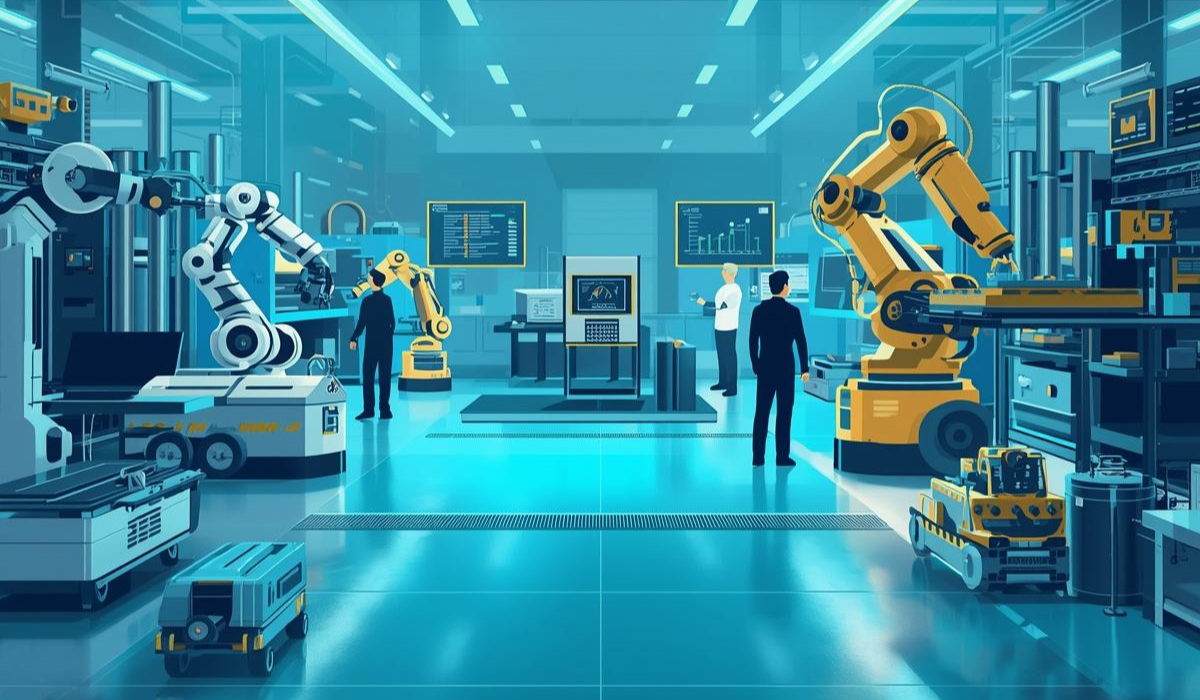
Robotics and automation are evolving faster than ever, reshaping how industries operate. From smart robots to AI-driven systems, today’s factories are becoming more intelligent, efficient, and flexible. These innovations increase productivity, enhance quality, and improve safety across sectors such as automotive, logistics, electronics, and pharmaceuticals. Here are the 10 most important robotics and automation trends transforming modern industry today.
1. Collaborative Robots (Cobots)
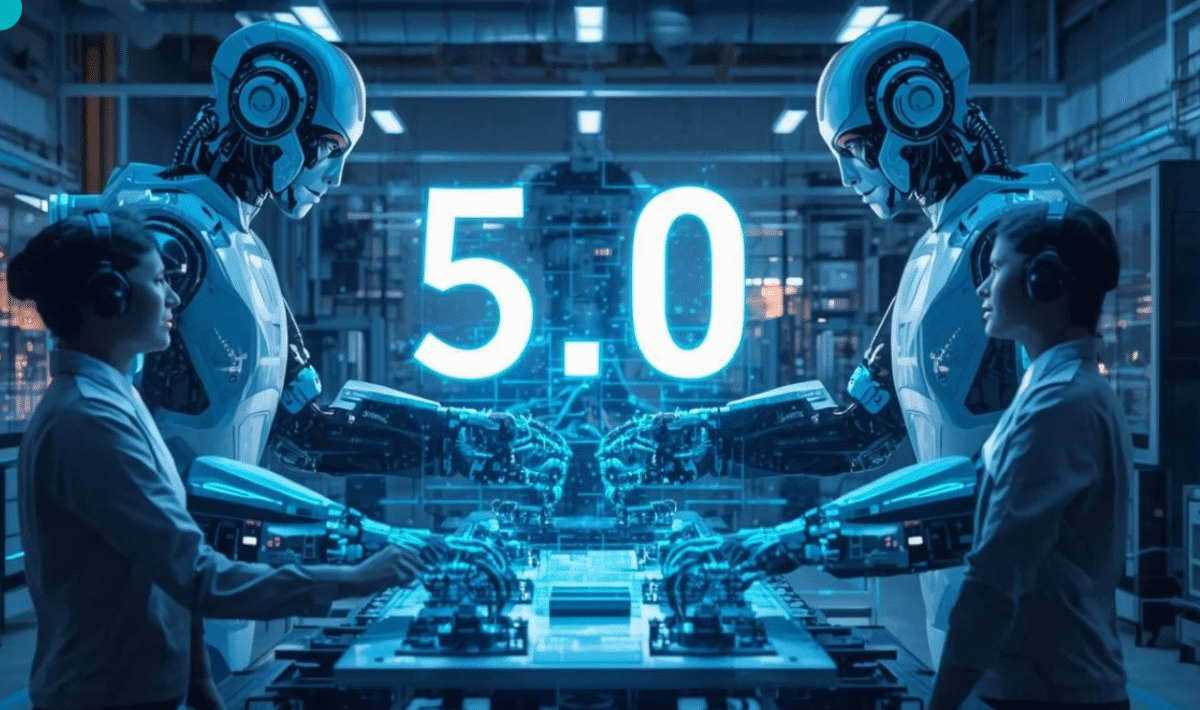
Cobots are designed to work safely alongside human operators. Unlike traditional industrial robots, they are flexible, easy to program, and require minimal infrastructure. They increase productivity without replacing humans, relieving them from repetitive, strenuous, or hazardous tasks. Small and medium-sized enterprises benefit significantly due to their lower cost and rapid deployment.
2. AI-Driven Automation
Artificial intelligence is transforming robots from programmed machines into intelligent collaborators. AI enables robots to learn, adapt, and optimize their operations in real time. Results include fewer errors, greater autonomy, and continuous process improvement, making factories smarter and more efficient.
3. AGVs and AMRs for Internal Logistics
Automated Guided Vehicles (AGVs) and Autonomous Mobile Robots (AMRs) revolutionize material handling. AGVs follow predefined paths, while AMRs adapt their routes in real time using AI and sensors. They streamline logistics flows, reduce accidents, and accelerate internal transport, enhancing overall operational efficiency.
4. Next-Generation 3D Machine Vision
Smart 3D cameras and sensors enable ultra-precise quality control. Using deep learning, they can detect defects invisible to the human eye and analyze thousands of components in seconds. Industries benefiting include automotive, electronics, pharmaceuticals, and packaging.
5. Mobile Collaborative Robots
These hybrid systems combine a robotic arm with a mobile platform. They can move between workstations to perform multiple tasks in a single day. This provides exceptional flexibility, ideal for factories producing small batches or frequently changing product lines.
6. Robotic 3D Printing
Combining robots with 3D printing allows the production of complex parts at scale. Multi-axis robotic arms provide unparalleled freedom of movement, enabling printing on irregular or large surfaces. Key applications: prototyping, aerospace, construction, and industrial tooling.
7. Digital Twins
Digital twins are virtual replicas of physical systems. By simulating production lines or robotic operations, industries can test, optimize, or diagnose setups before deployment. This reduces costs, prevents downtime, and improves operational planning, making factories more efficient.
8. Robotics for Predictive Maintenance
Autonomous robots equipped with thermal cameras, ultrasound, or LIDAR inspect facilities 24/7. AI identifies anomalies and predicts potential failures. This reduces unplanned downtime, minimizes human risk, and extends equipment lifespan, enhancing industrial reliability.
9. OT–IT Integration and IIoT Connectivity
The convergence of operational technology (OT) and information technology (IT) is critical for smart factories. IoT sensors, modern PLCs, and cloud platforms create fully connected systems. This enables real-time production adjustments and complete operational visibility, improving efficiency and decision-making.
10. Humanoid Robots for Versatile Tasks
Although still emerging, humanoid robots are advancing rapidly. They can walk, manipulate tools, open doors, and perform repetitive or complex tasks. They represent the future for environments requiring adaptability: logistics, manufacturing, service, and inspection.
Robotics and automation are no longer optional—they are the backbone of Industry 4.0 and the smart factories of tomorrow. Companies that embrace these technologies gain competitive advantages through faster production, reduced errors, cost savings, and more flexible operations.
robotics, industrial automation, cobots, AMR robots, AI robotics, smart factory, industry 4.0, digital transformation, industrial robotics, manufacturing automation, predictive maintenance, IIoT, digital twins, 3D machine vision